
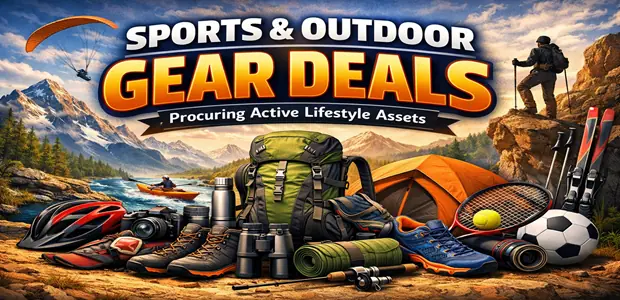
Introduction
The outdoor and active lifestyle market runs on brand premium as much as performance. The best sports and outdoor gear deals aren’t found by chasing a logo — they’re found by understanding which materials and construction details actually matter, then buying those specs wherever they’re priced fairly.
A $300 branded windbreaker and an unbranded $40 nylon-polyester shell frequently offer near-identical thermal protection. The difference is marketing, not material science. This guide focuses on the engineering that actually affects performance — stitch density, waterproof ratings, sole construction, insulation type — rather than the label sewn onto it.
For each category, we cover genuine trade-offs so you can prioritize your budget on the gear that affects performance most, rather than the items that just look good in a product photo.
Quick Recommendations
If you’re short on time, here’s the shortlist:
- Best shelter: Ultralight backpacking tent (under 3 lbs)
- Best cargo system: 40–60L hiking backpack with hip-load distribution
- Best base layer: Merino wool blend top
- Best rain shell: Packable waterproof nylon shell (Gore-Tex-style)
- Best footwear: Vibram-soled waterproof hiking boots
- Best hydration gear: Double-walled vacuum-insulated steel flask
- Best telemetry: Entry-level GPS/fitness tracker with offline mapping
We’ll break each of these down below, including where a pricier option is actually worth it.
Comparison Matrix
| Product | Best For | Key Strength | Potential Drawback | Verdict |
|---|---|---|---|---|
| Ultralight backpacking tent | Multi-day treks | Low pack weight, fast setup | Less durable in sustained high wind than heavier tents | Strong choice for weight-conscious hikers |
| 40–60L hiking backpack | Multi-day cargo hauling | Hip-belt weight distribution reduces shoulder strain | Bulkier than daypacks for short outings | Essential for longer trips |
| Merino wool base layer | Temperature regulation | Naturally odor-resistant, regulates warmth | Higher cost per garment than synthetic blends | Worth it for repeated multi-day use |
| Packable waterproof shell | Unexpected weather | Compresses small, genuinely waterproof when rated correctly | Less breathable than premium branded shells | Good value alternative to expensive jackets |
| Vibram-soled hiking boots | Ankle stability and traction | Deep lugs and rigid sole prevent slips on uneven terrain | Heavier and stiffer than trail-running shoes | Prioritize over “trail-style” sneakers |
| Insulated steel flask | All-day hydration | Retains temperature for many hours | Adds noticeable weight versus plastic bottles | High value, low price ceiling |
| GPS/fitness tracker | Route tracking and vitals | Functions in cellular dead zones | Entry-level models have smaller screens, fewer sensors | Good enough for most recreational use |
Individual Product Reviews
1. Ultralight Backpacking Tent
Overview: For multi-day treks, tent weight directly affects how much energy you spend carrying your shelter versus everything else. Ultralight tents (under 3 lbs) use aluminum poles and silicone-coated ripstop nylon to cut weight without eliminating structural integrity.
Pros:
- Significantly lighter than standard camping tents
- Fast setup, useful when racing daylight or weather
- Compact pack size frees up backpack volume for other gear
Cons:
- Thinner materials generally hold up less well in sustained high winds than heavier four-season tents
- Interior space is often tighter than bulkier alternatives
- Higher-end ultralight models can carry a real price premium over standard tents
Best For: Multi-day backpackers where pack weight is a bigger constraint than interior space.
Why We Recommend It: For anyone doing real mileage on foot, shaving pack weight has a compounding effect on fatigue over multiple days — this is one of the highest-impact upgrades in a backpacking setup.
2. High-Capacity Hiking Backpack (40L–60L)
Overview: A properly fitted backpack transfers load weight to your hips rather than your shoulders. Look for internal-frame construction, a padded hip belt, and modular webbing for attaching extra gear.
Pros:
- Hip-belt load distribution meaningfully reduces shoulder and back strain on long hikes
- Modular attachment points allow flexible gear configuration
- Reinforced lumbar support improves comfort on multi-hour treks
Cons:
- Overkill for day hikes — a smaller daypack is more practical for short outings
- Proper fit varies by torso length, so sizing matters more than with most gear
- Fully loaded packs at this capacity add real weight regardless of design
Best For: Multi-day trekkers carrying a tent, sleeping system, and several days of supplies.
Why We Recommend It: A well-fitted pack is the difference between a comfortable multi-day trip and a genuinely painful one — this is not a category to buy based on price alone.
👉 Execute Procurement: Secure Amazon Outdoor Infrastructure Deals — compare ultralight tents and hiking backpacks from top-rated outdoor sellers.
3. Merino Wool Base Layer
Overview: Merino wool naturally regulates temperature and resists odor buildup far better than cotton or many synthetic blends, making it a strong choice as a first layer for both cold-weather insulation and summer moisture-wicking.
Pros:
- Naturally resists odor across multiple days of wear
- Regulates temperature in both cold and mild conditions
- Softer against skin than many synthetic alternatives
Cons:
- Costs noticeably more per garment than synthetic base layers
- Requires more careful washing than synthetic fabrics
- Less durable against abrasion than some heavy-duty synthetics
Best For: Multi-day trips where you can’t wash or replace layers daily.
Why We Recommend It: The odor resistance alone makes this a practical upgrade for any trip longer than a single day, not just a comfort preference.
4. Packable Waterproof Shell (Gore-Tex-Style)
Overview: A compressible waterproof shell protects against unexpected rain or wind without the bulk of a traditional heavy jacket. Confirm the waterproof rating explicitly rather than trusting “water-resistant” marketing language, which describes a much lower level of protection.
Pros:
- Packs down small enough to carry as backup gear on any trip
- Genuinely waterproof when the rating is properly verified
- Far less bulky than traditional insulated rain jackets
Cons:
- Breathability is generally lower than premium branded waterproof-breathable fabrics
- Thinner shells offer minimal insulation on their own — layering is required in cold weather
- Zippers and seams are common failure points on lower-quality versions
Best For: Hikers who want backup weather protection without dedicating a full jacket’s worth of pack space.
Why We Recommend It: For occasional exposure to rain or wind, this covers the core function of expensive branded shells at a fraction of the price — just verify the waterproof rating before buying.
👉 Execute Procurement: Secure Amazon Activewear & Apparel Deals — browse merino base layers and packable waterproof shells.
5. Vibram-Soled Waterproof Hiking Boots
Overview: Footwear affects stability more than almost any other gear choice. Deep-lugged, rigid-soled boots provide genuine ankle support and traction on uneven terrain — something flat-soled “trail-style” sneakers cannot replicate.
Pros:
- Deep lug patterns provide real traction on loose or wet terrain
- Rigid soles reduce ankle rolling on uneven ground
- Waterproof membranes keep feet dry in wet conditions
Cons:
- Heavier and stiffer than trail-running shoes, with a break-in period
- Waterproof membranes reduce breathability in hot conditions
- Higher upfront cost than casual sneakers marketed for outdoor use
Best For: Hikers on uneven, rocky, or wet terrain who need real ankle stability.
Why We Recommend It: This is the category where cutting corners costs the most — a foot injury from inadequate footwear ends a trip entirely, while every other gear compromise is just inconvenient.
6. Double-Walled Vacuum-Insulated Steel Flask
Overview: An 18/8 stainless steel double-walled flask retains temperature for hours without relying on a specific brand name — the vacuum insulation technology is largely standardized across manufacturers at this point.
Pros:
- Keeps drinks cold or hot for many hours without added ice or reheating
- Durable steel construction resists dents and cracks better than plastic
- Widely available at a fraction of heavily marketed branded prices
Cons:
- Adds more weight than a simple plastic bottle
- Narrow-mouth designs can be harder to clean thoroughly
- Insulation performance still varies by build quality, even among similar-looking products
Best For: All-day outings where maintaining drink temperature matters.
Why We Recommend It: The core insulation technology is nearly identical across brands at this price tier — there’s little functional reason to pay a major premium for a specific label.
7. Entry-Level GPS/Fitness Tracker
Overview: A dedicated GPS and fitness tracker monitors heart rate, route mapping, and basic vitals without relying on a cellular connection — a meaningful advantage in areas without reliable signal.
Pros:
- Functions for route tracking and vitals monitoring in cellular dead zones
- Multi-day battery life on most entry-level models
- Useful long-term data for tracking fitness progress across trips
Cons:
- Smaller screens and fewer sensors than premium multisport watches
- GPS accuracy can drift slightly in dense tree cover or canyons
- Companion apps vary in quality and can be a weak point of the overall experience
Best For: Recreational hikers and runners who want route and vitals data without paying for a premium multisport watch.
Why We Recommend It: For most recreational users, the accuracy gap between entry-level and premium GPS trackers is smaller than the price gap suggests.
👉 Execute Procurement: Secure Amazon Sports Tech & Hydration Nodes — compare insulated flasks and entry-level GPS/fitness trackers.
Buying Guide
Important Features to Look For
- Actual waterproof ratings, not just “water-resistant” labeling. These terms describe very different levels of protection — confirm the specific rating before assuming a jacket or boot will hold up in real rain.
- Sole construction on footwear. Deep lugs and rigid Vibram-style soles provide real traction and ankle support that flat, foam-soled “trail-style” sneakers cannot match.
- Fabric composition on base layers. Merino wool and synthetic moisture-wicking blends regulate temperature far better than cotton, which retains moisture and accelerates heat loss in cold or windy conditions.
- Pack weight versus durability trade-offs. Ultralight gear reduces fatigue on long trips but may sacrifice some durability compared to heavier, more rugged equivalents — match this to your actual trip length and conditions.
Common Mistakes Buyers Make
- Buying pre-packaged “camping starter kits.” These frequently bundle a low-quality tent, an underrated sleeping bag, and a fragile flashlight to move inventory together — individually sourced gear typically performs better for similar total cost.
- Choosing cotton garments for cold or wet conditions. Cotton retains moisture and actively accelerates heat loss once wet, unlike wool or synthetic alternatives.
- Prioritizing aesthetics over sole construction in footwear. Flat-soled “trail-style” sneakers look outdoorsy but don’t provide the traction or ankle support that genuine hiking terrain requires.
- Paying a steep premium for a specific branded water bottle or flask. The underlying vacuum-insulation technology is largely standardized — the price difference is often driven by marketing, not performance.
Budget Considerations
If you’re building a kit from scratch, prioritize footwear and your primary shelter/backpack first — these directly affect safety and comfort on any trip. Base layers and a packable shell are the next priority, since they cover the most common weather scenarios. Hydration gear and a fitness tracker are worthwhile but can reasonably be added later without affecting the core trip experience.
Avoid pre-bundled “starter kits” even when the sticker price looks appealing — individually sourced gear at similar total cost consistently outperforms bundled kits, which are often built around clearing lower-quality inventory.
Long-Term Value
The most useful way to evaluate outdoor gear cost is cost-per-use, not sticker price. A $20 pair of hiking shoes that fails after a handful of uses is a worse financial outcome than an $80 pair of boots that lasts for hundreds of hikes. This applies especially to footwear, backpacks, and shelters — durability compounds in value the more frequently you use the gear, while accessories used less often can reasonably skew toward the cheaper end of quality.
Frequently Asked Questions
Is merino wool actually worth the extra cost over synthetic base layers? For multi-day trips, yes — the odor resistance alone reduces how much clothing you need to pack. For single-day outings where you can wash clothes after, a quality synthetic blend performs similarly for less money.
Do I need a four-season tent, or is an ultralight three-season tent enough? For most recreational backpacking in moderate conditions, an ultralight three-season tent is sufficient. Four-season tents are worth the added weight and cost only if you’re regularly camping in sustained high winds or winter conditions.
How do I know if a jacket is actually waterproof or just water-resistant? Check for a specific waterproof rating (measured in millimeters of water column) rather than trusting general marketing terms. “Water-resistant” garments will not hold up in sustained rain the way a properly rated waterproof shell will.
Are entry-level GPS trackers accurate enough for serious training? For recreational fitness tracking and general route mapping, yes. For competitive training requiring precise sensor data, a premium multisport watch will offer more accurate and detailed metrics.
What’s the single highest-impact gear upgrade for a beginner hiker? Footwear. Proper hiking boots with real ankle support and traction prevent the injuries that most commonly end a trip early, and the performance gap versus flat-soled sneakers is larger than in almost any other category.
Is it worth buying a pre-packaged camping starter kit to save money upfront? Generally no. These kits typically bundle a low-quality tent, sleeping bag, and accessories together to move inventory, and individually sourced gear at a similar total price usually performs noticeably better.
Final Verdict
Outdoor and active lifestyle gear doesn’t need to come with a brand-name premium to perform well — what actually matters is material engineering: waterproof ratings, sole construction, insulation type, and genuine fit. Prioritize footwear and your core shelter/cargo system first, since these have the biggest impact on both safety and comfort.
From there, a merino base layer, a packable waterproof shell, and a reliable hydration and telemetry setup round out a kit that performs on par with far more expensive branded equivalents. Skip pre-packaged starter kits, verify waterproof ratings before buying, and think in terms of cost-per-use rather than sticker price — that’s how you build durable, high-performance gear without paying the lifestyle premium.
📩 Subscribe to our email newsletter for verified outdoor gear deals, seasonal price drops, and new buying guides sent straight to your inbox.
Affiliate Disclaimer
We may earn a commission if you make a purchase through our links, at no extra cost to you.
Advertisement
Advertisement