
1. Introduction
Every fall, the same ritual repeats in millions of households: a cart full of paper towels, scented sprays, and disposable wipes, followed by a receipt that quietly climbs past $80 — and a cabinet that’s empty again by December.
In 15 years of corporate financial auditing and operational risk control, I’ve watched the same pattern play out in facilities budgets. Recurring “consumable” line items — the stuff you buy once and throw away — are almost always the biggest silent drain on any budget, whether it’s a corporate building or a household.
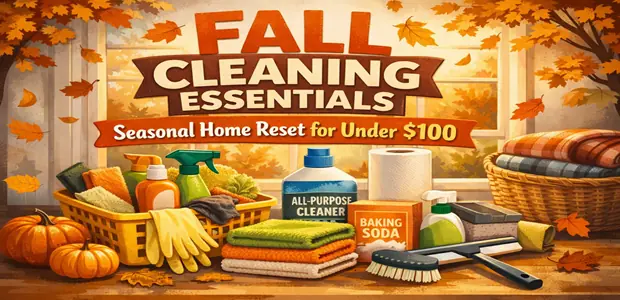
This guide isn’t about buying more cleaning products. It’s about auditing what you already spend and reallocating it toward a small set of durable, high-yield tools that reset your home for winter — for less than $100 total.
2. Quick Verdict
If you’re comparing a retail disposable cleaning kit against a commercial-grade concentrate and reusable textile system, the reusable system wins on almost every long-term metric: cost per use, waste generated, and versatility. The retail kit still wins on one thing — zero setup, zero dilution, buy-and-go convenience.
For a one-time fall refresh with no intention of repeating the process, either works. For anyone who cleans their home more than a few times a year (which is most people), the concentrate-and-microfiber approach pays for itself within one season.
3. Product Overview
Product A — Commercial Concentrate & Reusable System A bundle built around a concentrated multi-surface or enzymatic cleaner, a set of high-GSM microfiber cloths, and a washable spin-mop head. You supply water and reusable spray bottles; the concentrate does the rest.
Product B — Traditional Retail Disposable Kit The familiar supermarket lineup: pre-mixed spray bottles, disposable wipes, paper towel multi-packs, and proprietary mop refill pads designed to work only with one branded mop system.
Both are marketed as “fall cleaning solutions.” Only one is designed to still be useful in March.
4. Features Breakdown
Chemical Sourcing
Product A ships as concentrate — typically a 32oz or 128oz jug that dilutes into dozens of ready-to-use bottles. Product B ships pre-diluted, meaning you’re paying shipping and packaging costs on mostly water.
Textile & Tool Design
Product A uses washable microfiber cloths and mop heads rated for 300–500 wash cycles. Product B relies on paper towels and single-use wipes that are discarded after one pass.
Compatibility
Product A’s reusable hardware is generally “open-source” — it accepts generic cloths, generic solutions, and generic refill pads. Product B often locks you into a single brand’s proprietary refill system, which is a real cost trap worth flagging: once you own the mop, you’re committed to that brand’s pads indefinitely.
Winterization Add-Ons
Neither kit inherently includes weather-stripping or HVAC filters, but Product A’s positioning as a broader “seasonal reset” bundle more commonly pairs with these thermal-sealing accessories, while Product B is almost exclusively surface-cleaning focused.
5. Real-World Pros
Product A (Concentrate/Reusable System)
- Meaningfully lower cost per ounce once diluted
- Far less packaging waste over a season
- Microfiber traps dust and allergens more effectively than paper towels
- Hardware typically lasts multiple years if maintained
Product B (Retail Disposable Kit)
- No dilution, mixing, or setup required
- Familiar scent and packaging most people already trust
- Lower upfront commitment if you’re not sure you’ll clean again soon
- Easy to find at any grocery store without planning ahead
6. Real-World Cons
Product A
- Requires you to own or buy spray bottles and buckets
- Dilution ratios mean an initial learning curve
- Concentrated formulas can be more potent — care needed around pets, kids, and certain surfaces
- Not as instantly gratifying; there’s a small setup tax before first use
Product B
- Cost per use is significantly higher over time
- Generates far more plastic and paper waste
- Proprietary mop refills quietly become a recurring subscription-like expense
- Scented sprays are frequently marketed at a premium for identical base chemistry
7. Comparison Table
| Feature | Product A (Concentrate/Reusable) | Product B (Retail Disposable) |
|---|---|---|
| Upfront cost | $25–$40 for concentrate + tools | $15–$25 for a starter kit |
| Cost per use (after 3 months) | Low — pennies per application | High — repurchase every few weeks |
| Waste generated | Minimal (washable textiles) | High (paper towels, wipes, refill pads) |
| Brand lock-in | Low — accepts generic refills | Often high — proprietary pad systems |
| Setup effort | Requires dilution/mixing | None — ready to use |
| Best for | Repeat seasonal cleaning, long-term savings | One-off cleans, renters, low commitment |
| Longevity of hardware | 1–3+ years with care | Tools are usually single-season quality |
8. Who Should Buy It?
Product A makes sense if you:
- Clean your home regularly (weekly or biweekly), not just seasonally
- Want to lower your long-term household consumable spend
- Are comfortable doing a small amount of upfront dilution/mixing
- Care about reducing plastic and paper waste
9. Who Should Skip It?
Product B (or skipping Product A) makes more sense if you:
- Are renting short-term and don’t want to invest in reusable hardware
- Need something the same day, with zero setup
- Clean infrequently enough that a $15 kit will last you all season anyway
- Have limited storage space for buckets, spray bottles, and bulk cloths
10. Value For Money Analysis
Run the math over a single winter season (roughly 12 weeks of regular cleaning):
- A $6 bottle of premixed retail spray typically lasts 2–3 weeks per surface type. Multiply that across bathroom, kitchen, and glass cleaners, and a household can spend $60–$90 just on spray refills alone.
- A $18–$25 jug of commercial concentrate, diluted correctly, can realistically produce the equivalent of 40–60 standard spray bottles — covering the same 12 weeks for a fraction of the cost.
- Microfiber cloths, if laundered rather than discarded, eliminate the recurring $10–$15/month spent on paper towels and wipes.
The break-even point for most households lands somewhere around week 4 to 6 of the season. Past that point, the concentrate-and-microfiber approach is simply cheaper, not just “eventually” but measurably so.
The one caveat: if you’re doing a single, one-time deep clean and don’t expect to repeat the process, the retail kit’s lower upfront cost and zero learning curve may actually be the more rational choice. Value isn’t just about unit economics — it’s about matching the tool to how often you’ll actually use it.
Ready to build out your own version of this system?
👉 Secure Amazon Commercial Cleaning Deals
11. Alternatives Worth Considering
- Hybrid approach: Buy one concentrate for general surfaces, but keep a small pack of disposable wipes on hand for quick spot-cleaning — this avoids over-committing to either extreme.
- Steam cleaners: For households wanting to cut chemical use almost entirely, a steam mop is a higher upfront cost but eliminates most liquid cleaner spend long-term.
- Refillable spray bottle subscriptions: Some brands now sell concentrate refill pods specifically designed for standard spray bottles, splitting the difference between convenience and waste reduction.
If reusable textiles are the part that appeals to you most, this is where to start:
👉 Secure Amazon Reusable Cleaning Tool Deals
And if you’re extending the reset beyond surface cleaning into actual thermal efficiency — sealing drafts and swapping HVAC filters — that’s a separate but complementary category:
👉 Secure Amazon Winterization & Hardware Deals
12. FAQ
Is a concentrated cleaner as effective as a premixed retail spray? Generally yes, and often more effective, since you control the dilution strength for the specific job. Heavier grime (ovens, grout) can use a stronger mix, while everyday surfaces use a lighter one — something a fixed premixed spray can’t offer.
How much can I realistically save by switching to concentrate and microfiber? Most households see meaningful savings by the second month, once the upfront cost of concentrate and cloths is offset by no longer repurchasing paper towels and premixed sprays weekly.
Are proprietary mop refill pads really that much of a cost trap? Yes. Once you own a mop that only accepts one brand’s disposable pads, you’ve effectively signed up for a recurring cost with no easy exit unless you replace the mop itself. Generic, washable-head mops avoid this entirely.
Do I need special safety precautions when diluting concentrated cleaners? Yes — always follow the manufacturer’s dilution ratio exactly, use proper ventilation, and store diluted bottles labeled clearly, especially around children or pets. Concentrates are more potent by design, so accurate mixing matters more than with premixed products.
Is this worth it if I only do a deep clean once or twice a year? Probably not as strongly. The value of the concentrate-and-reusable approach comes from repeated use. For a single annual deep clean, a smaller retail kit may genuinely be the more cost-effective and lower-effort choice.
13. Final Verdict
Neither system is objectively “better” in every scenario — the right choice depends entirely on how often you clean and how much waste you’re willing to tolerate for convenience. For frequent, ongoing home maintenance, the commercial concentrate and reusable textile approach is the financially smarter long-term pick. For infrequent, low-commitment cleaning, the traditional retail kit still has a legitimate place.
Whichever direction you go, treat this fall reset the way a facility manager would treat preventive maintenance: a small, deliberate investment now that avoids larger costs — draftier rooms, higher heating bills, worn-out hardware — later in the season.
🚀 Want more high-value sourcing alerts before the season shifts?
Don’t let retail brands quietly drain your household budget with single-use products and proprietary refill traps. Subscribe to the DEALSisHERE Insider Network and get strategic procurement and budget-control deal alerts sent straight to your inbox:
📩 Subscribe to our Email Newsletter — the definitive guide to smart seasonal shopping, deal stacking, and long-term household savings.
14. Affiliate Disclaimer
We may earn a commission if you make a purchase through our links, at no extra cost to you.
Advertisement
Advertisement